Description
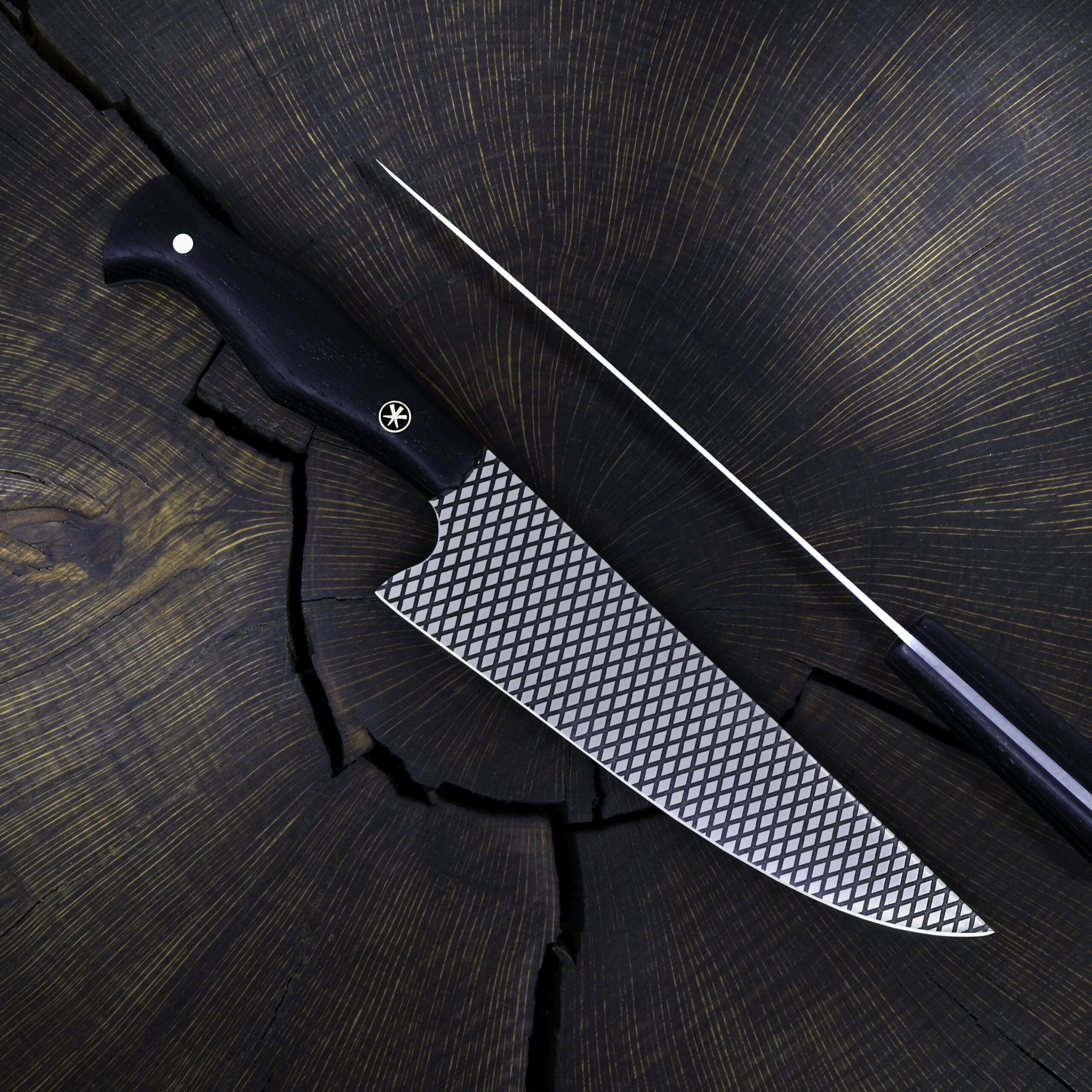
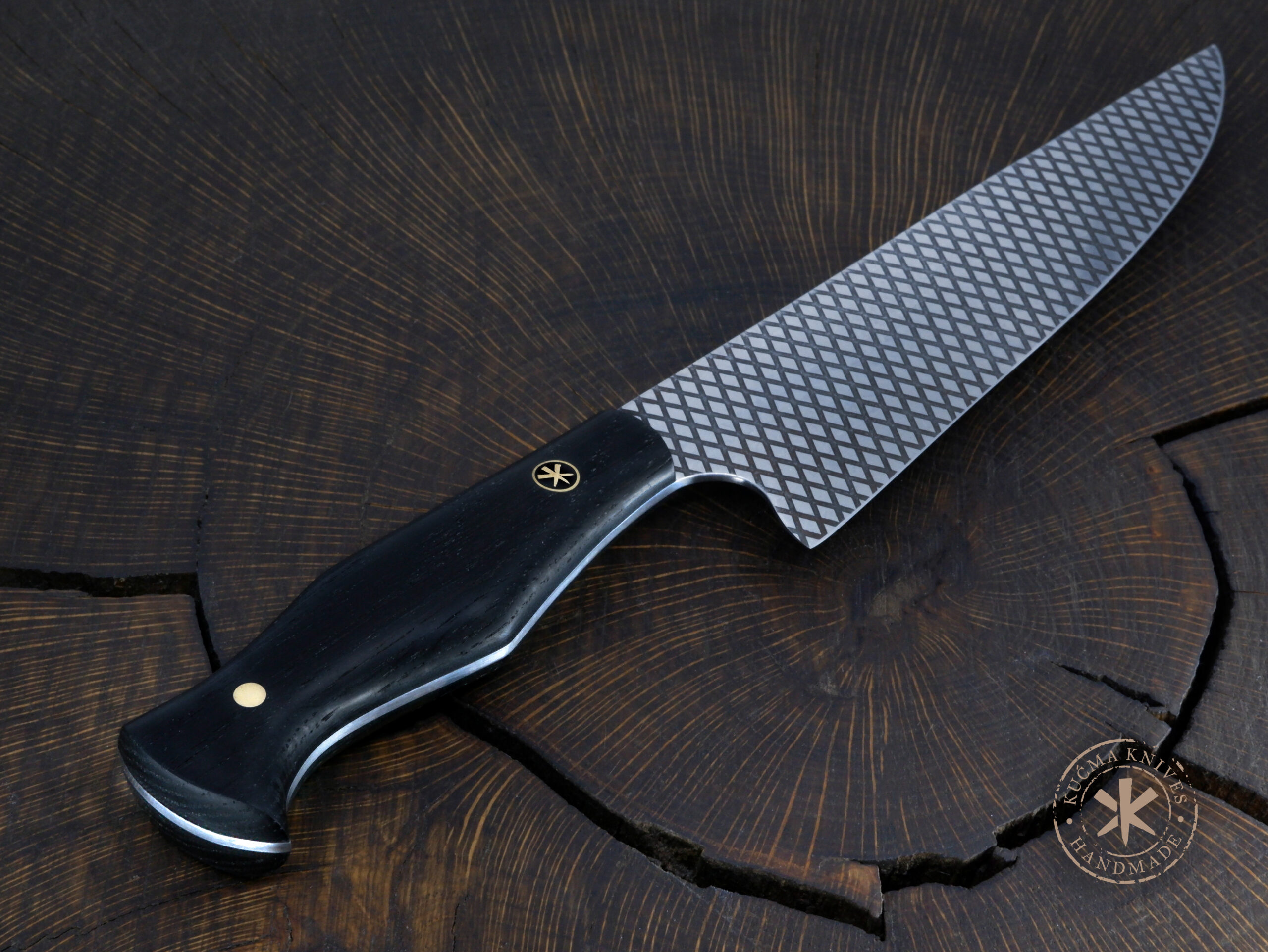
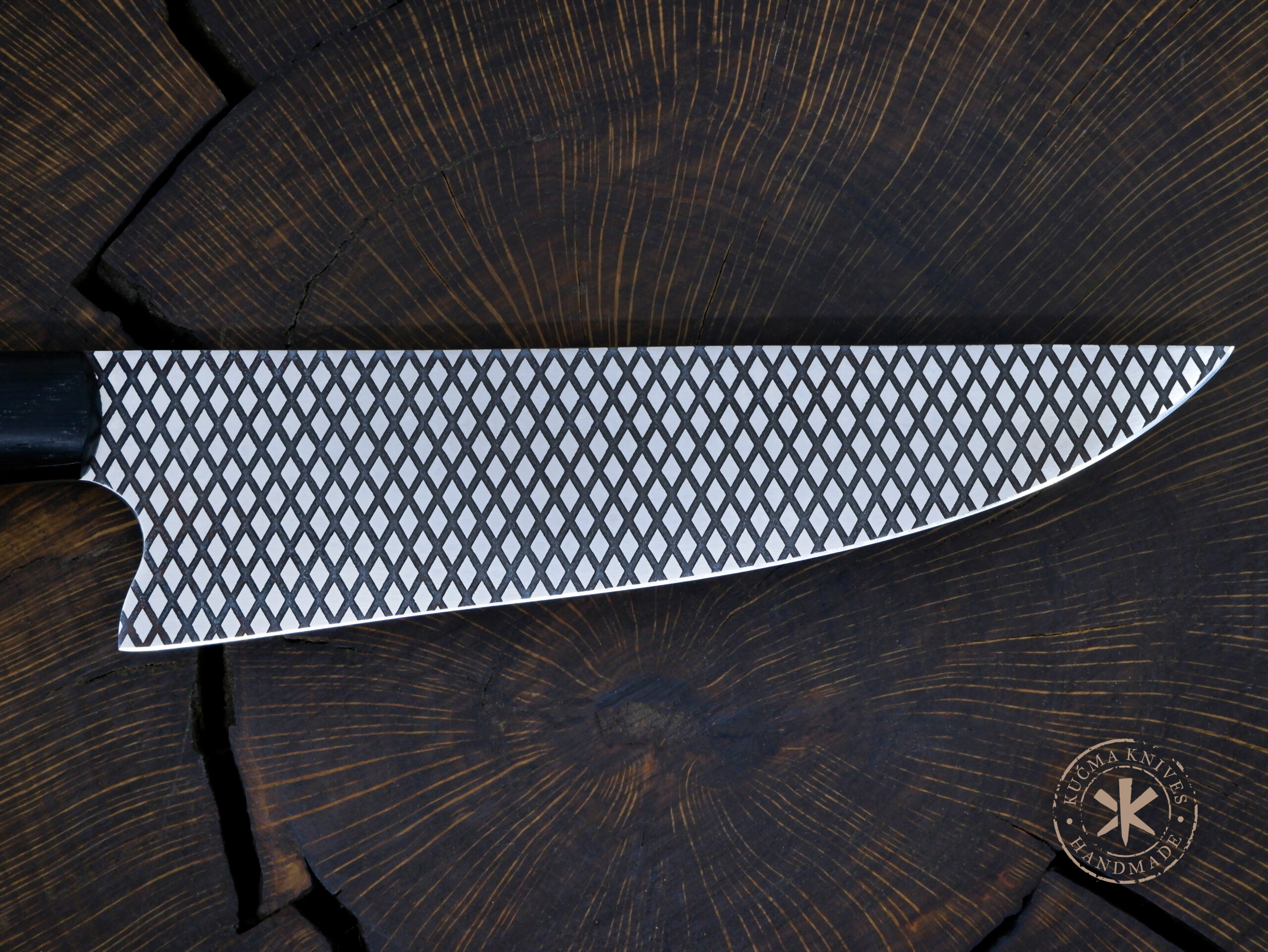
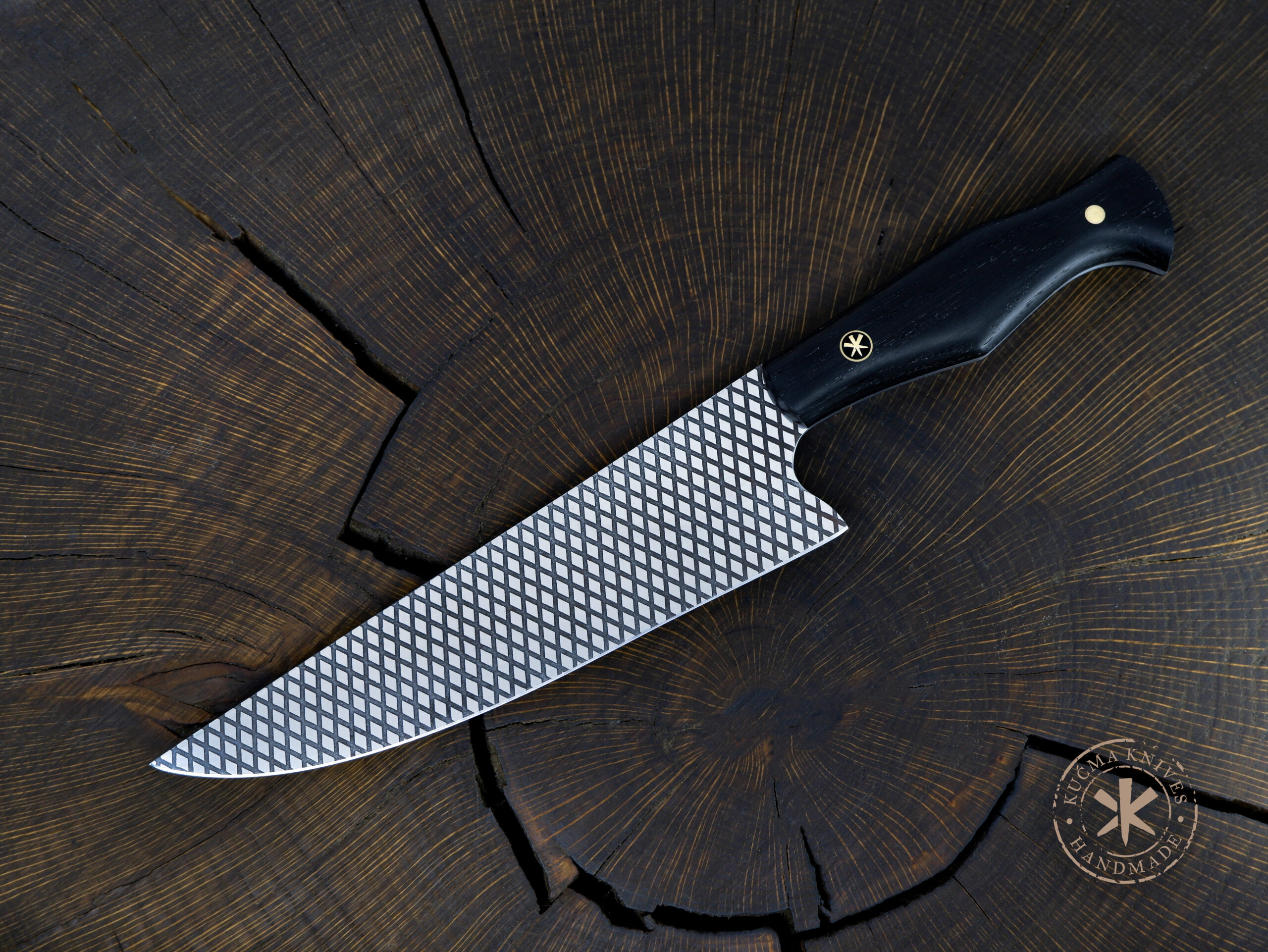
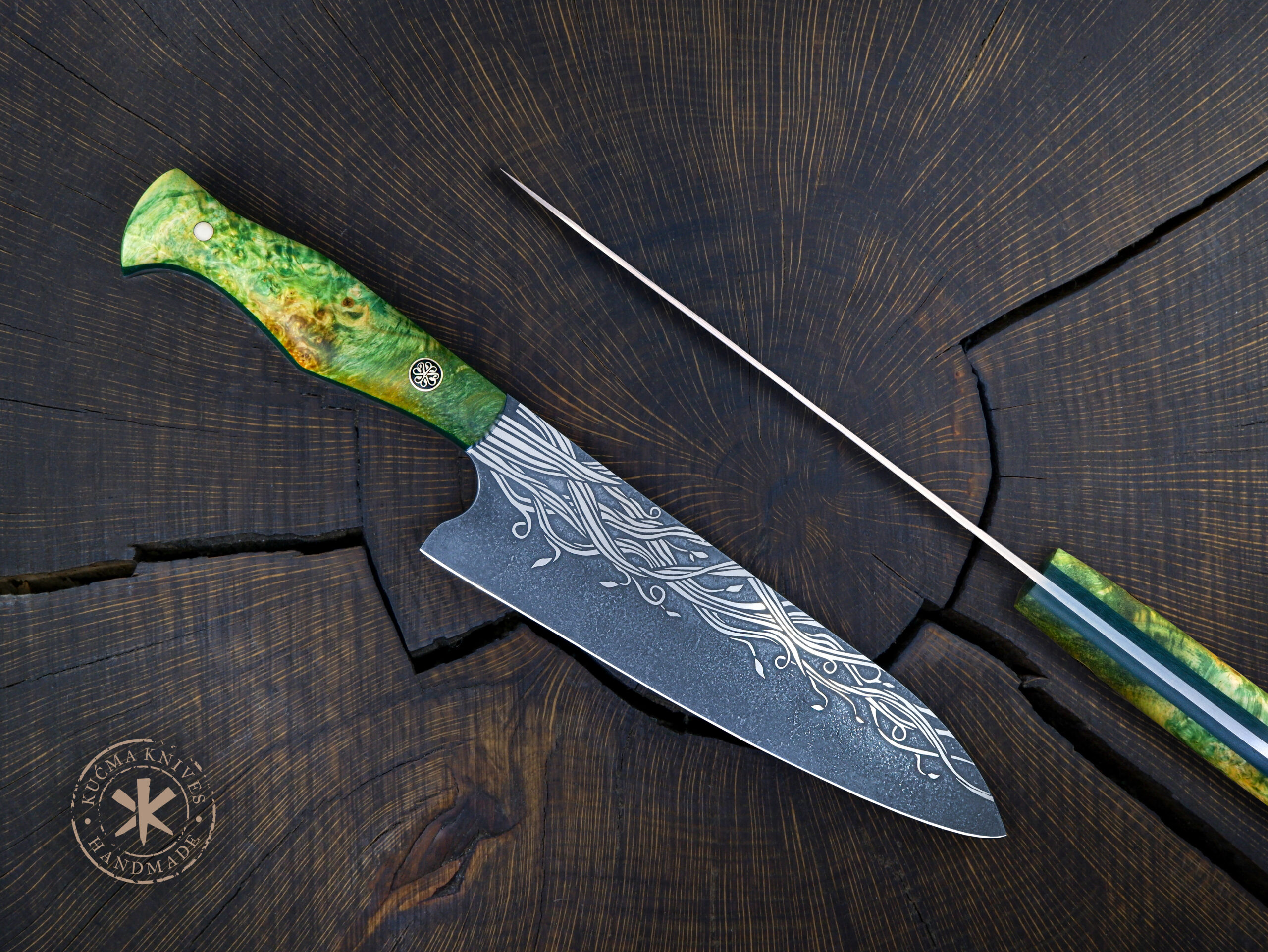
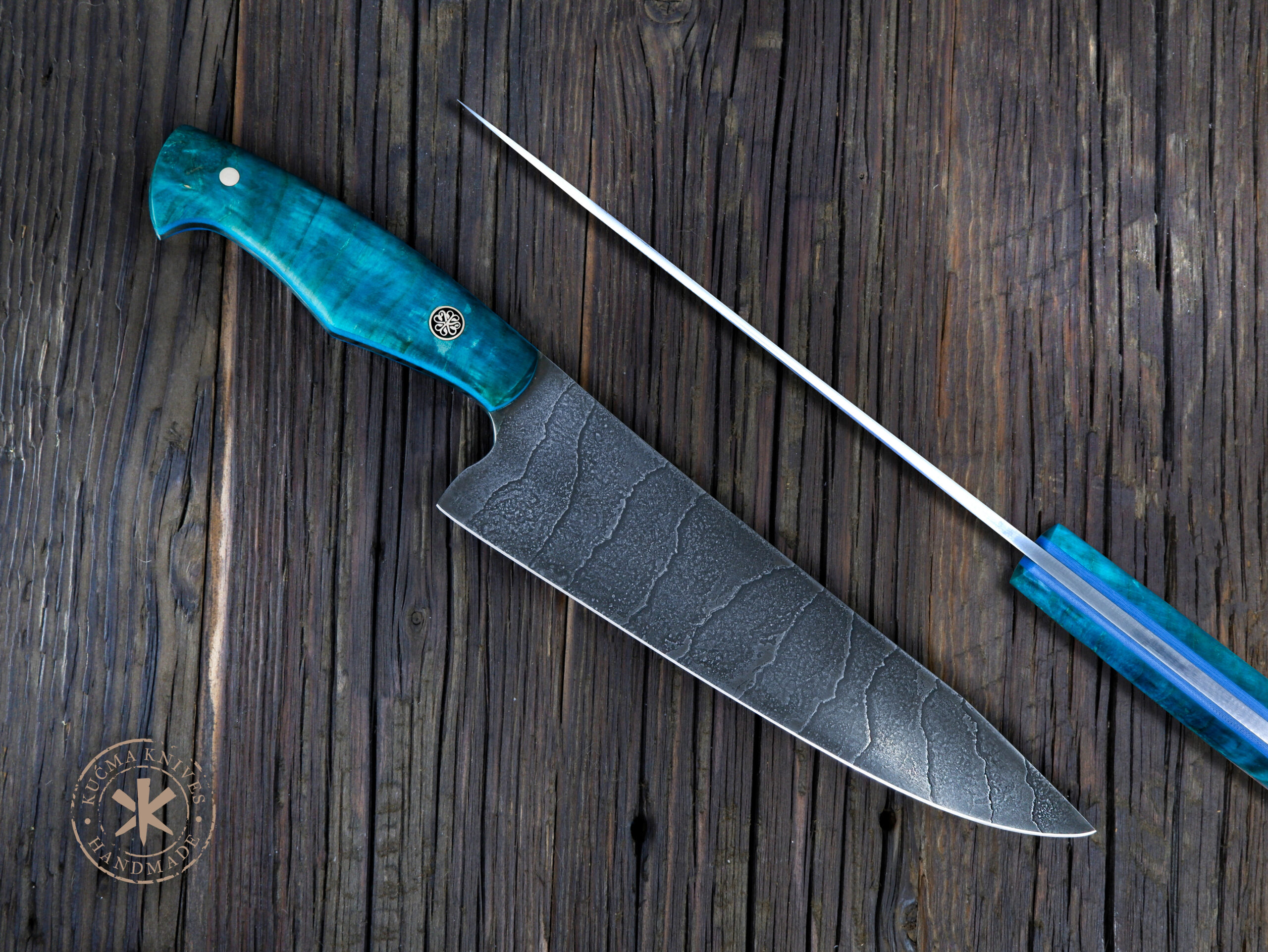
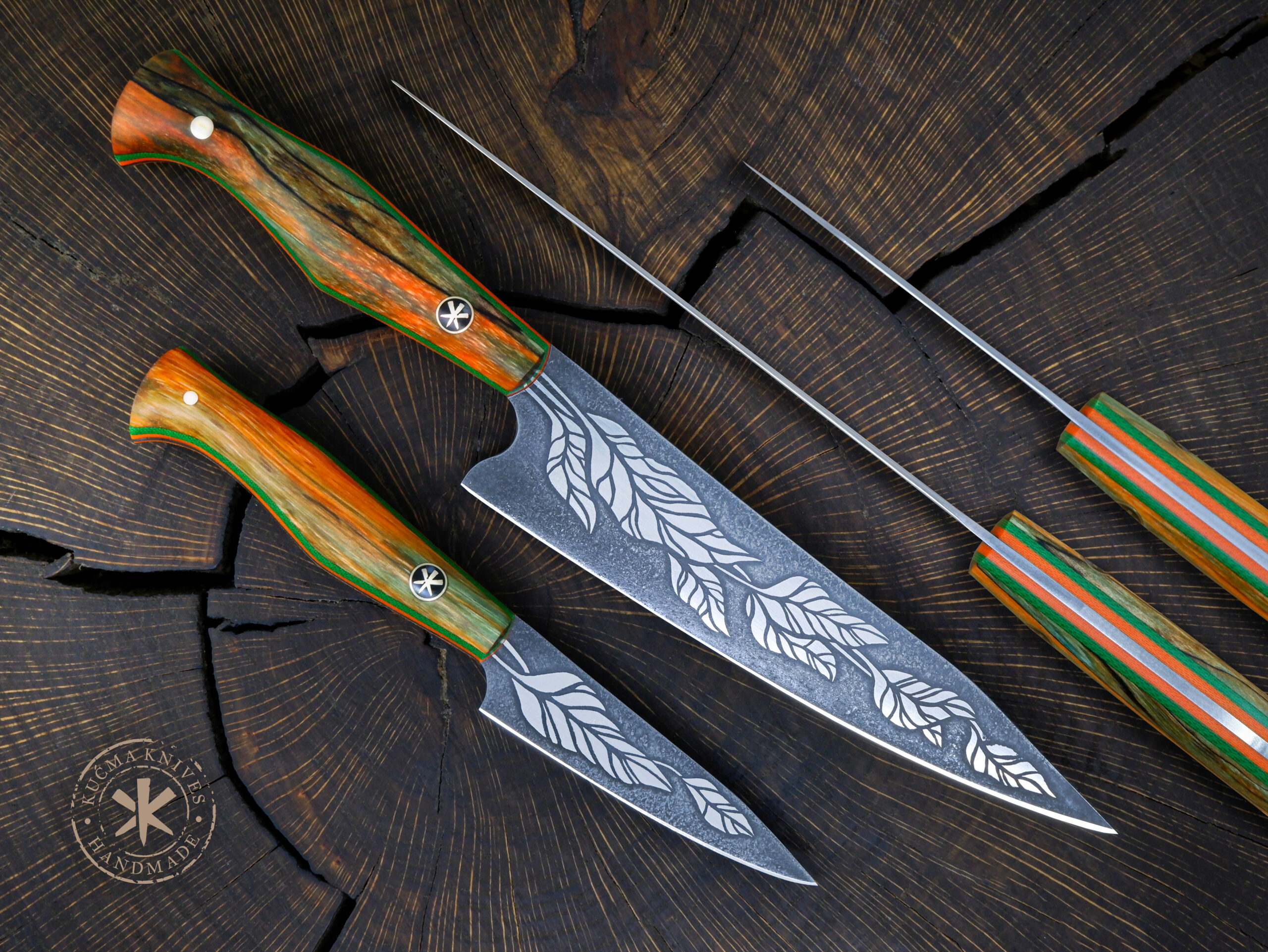
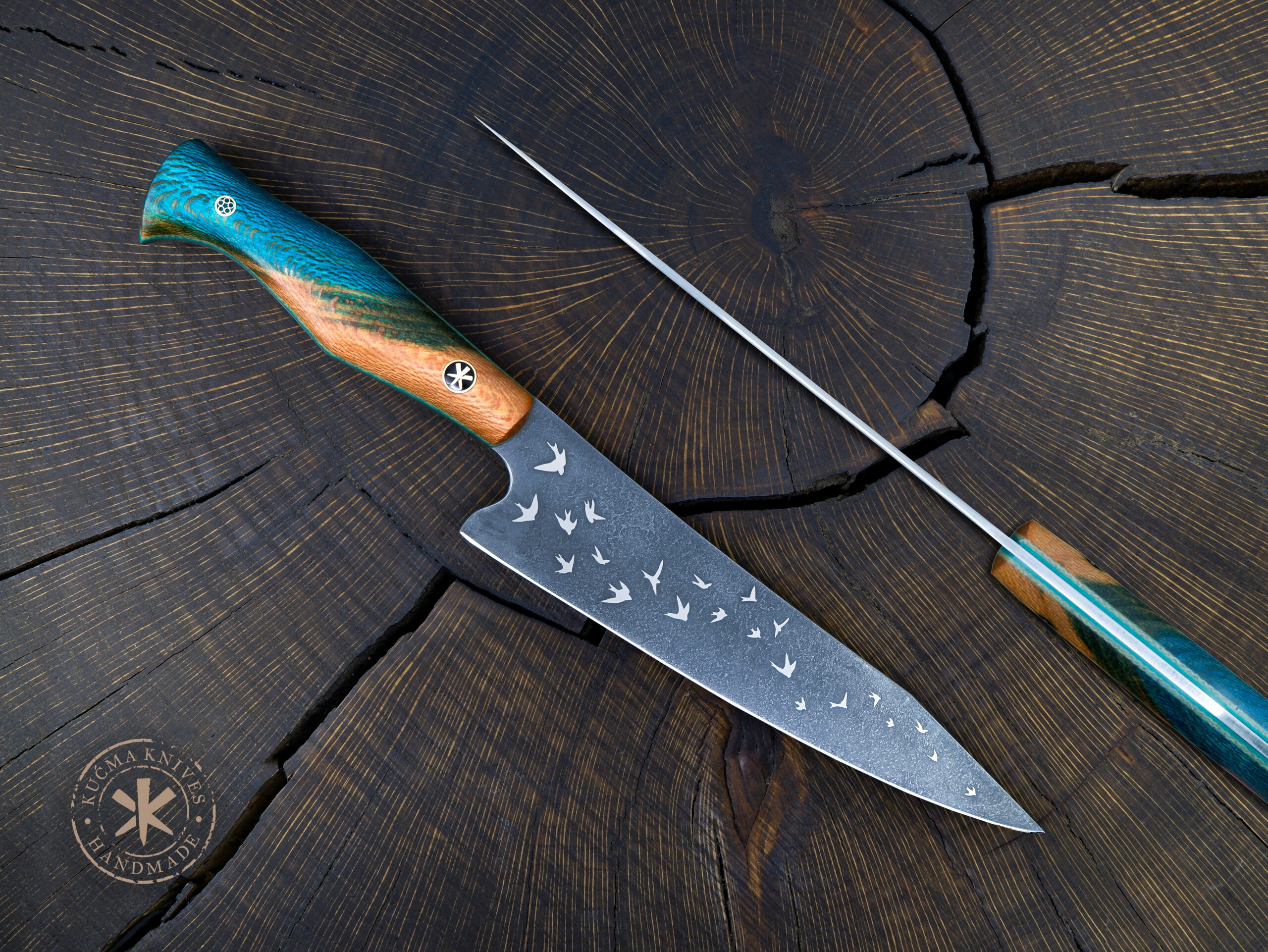
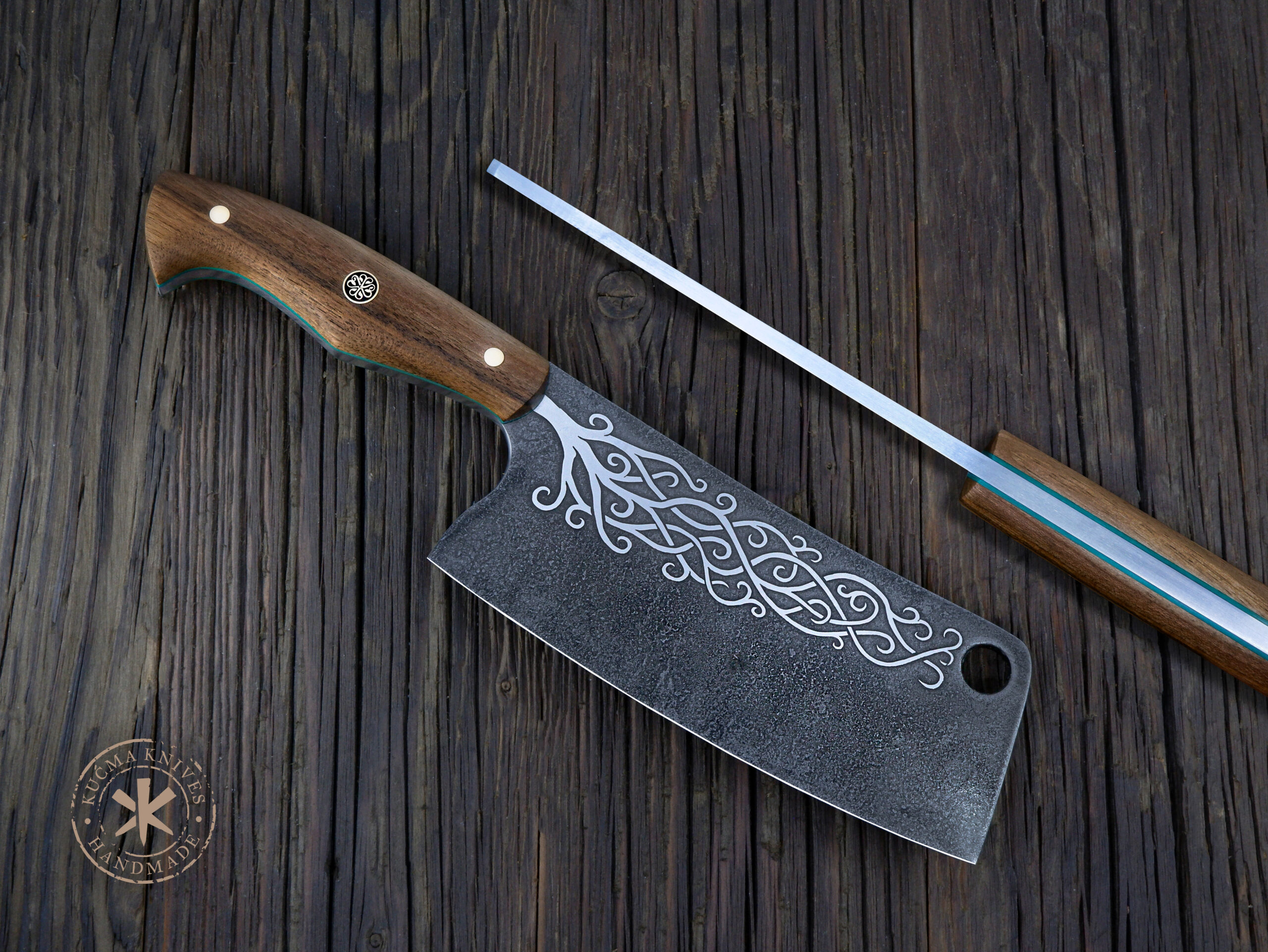
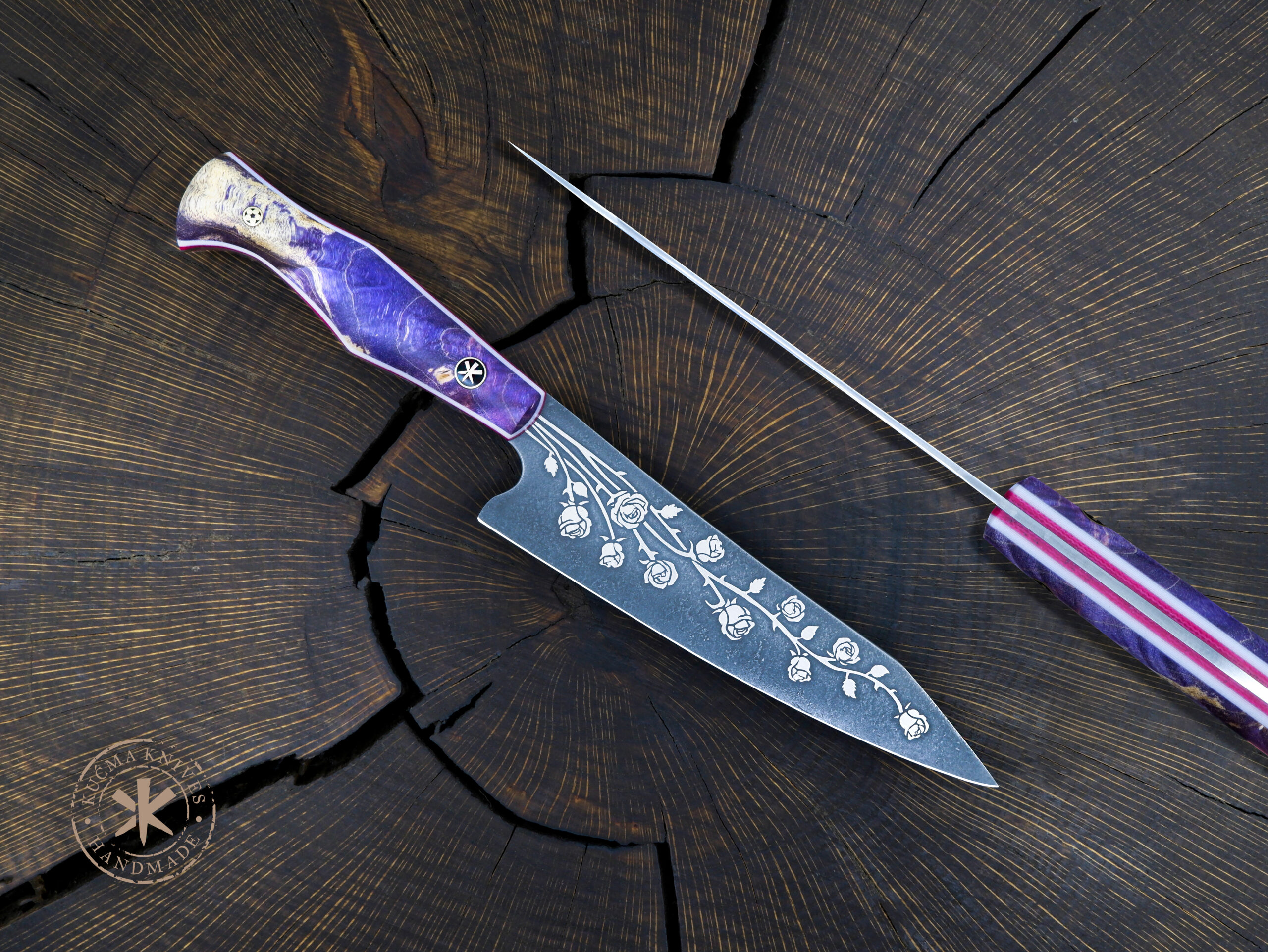
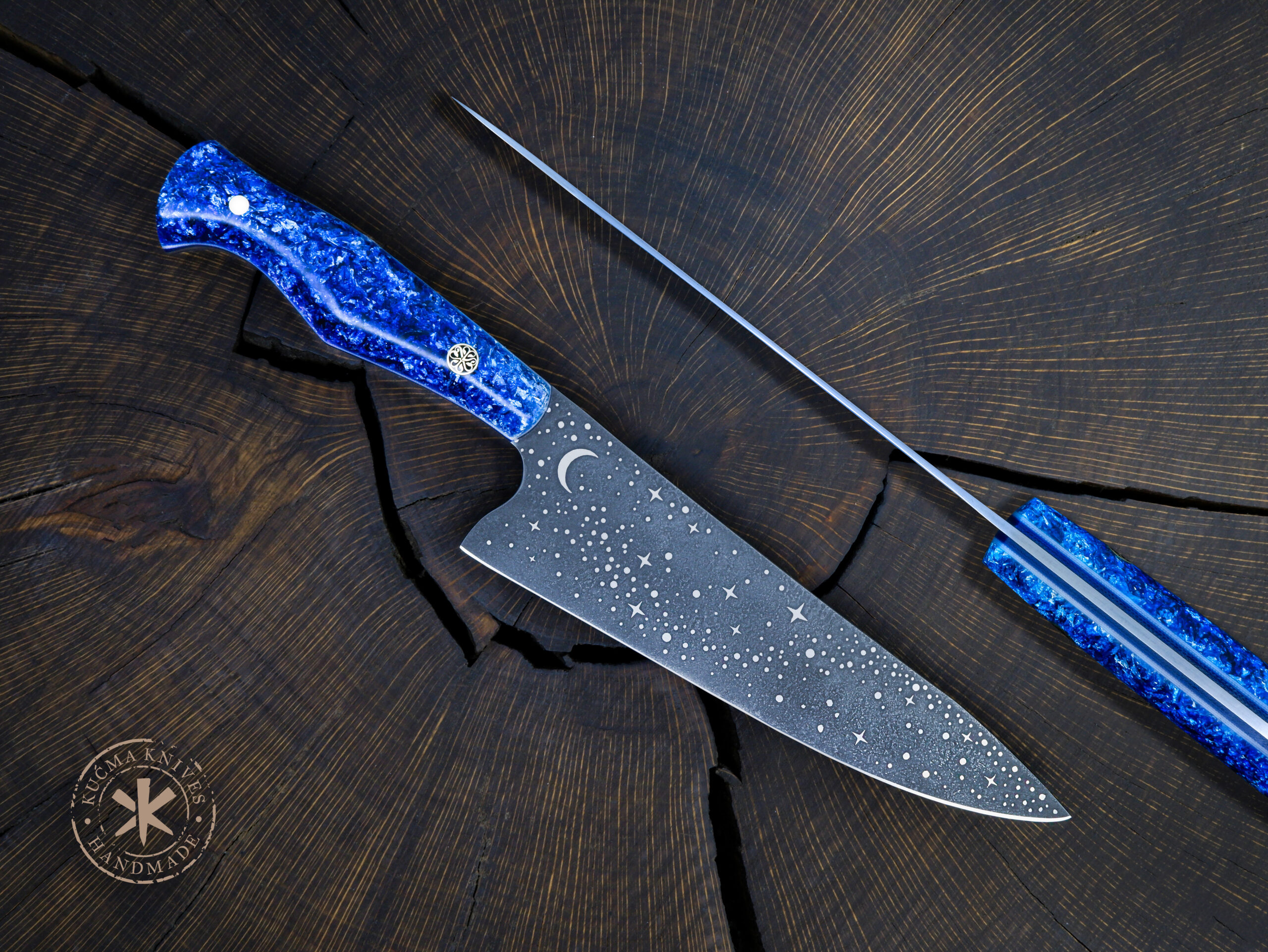
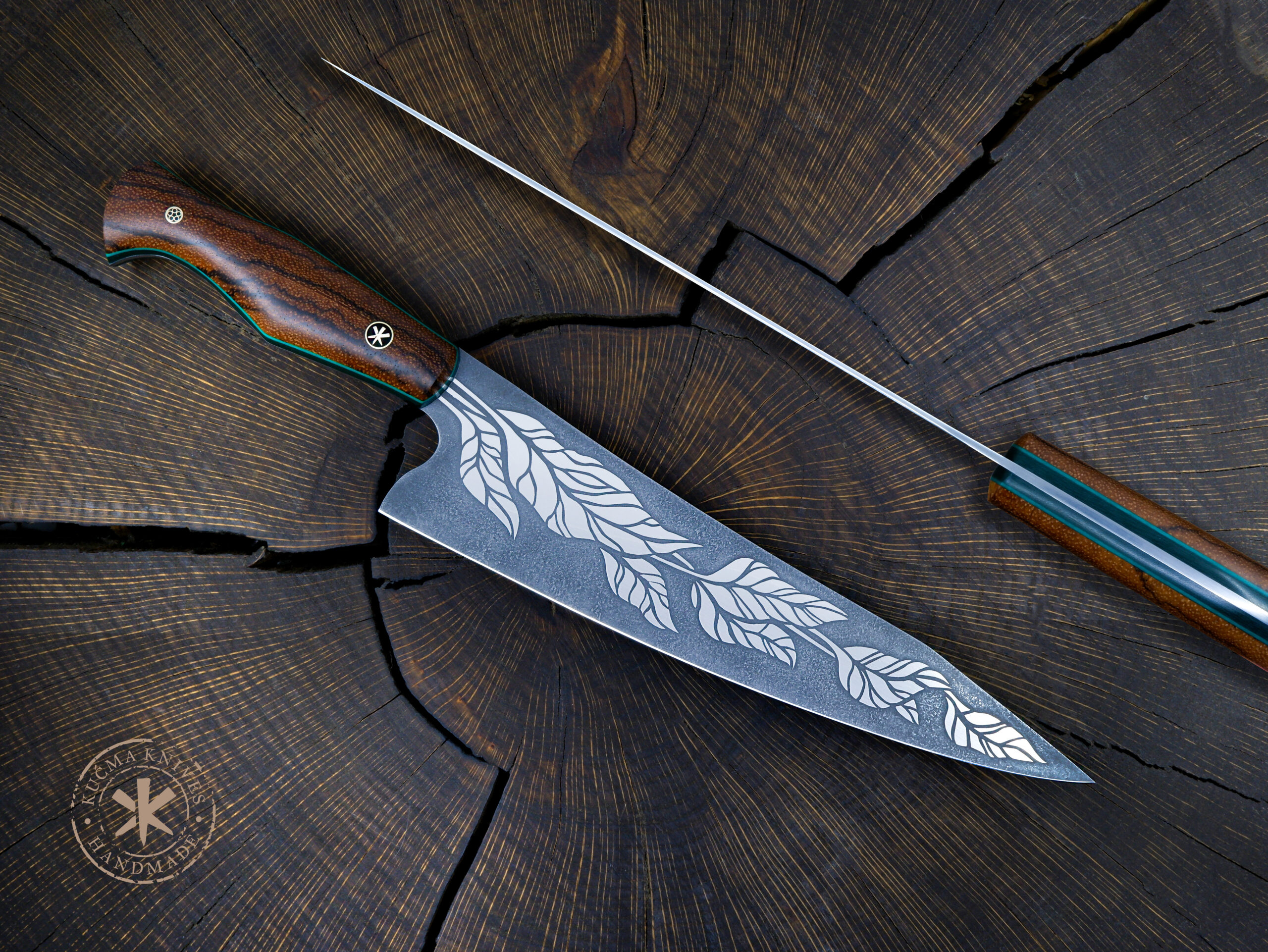
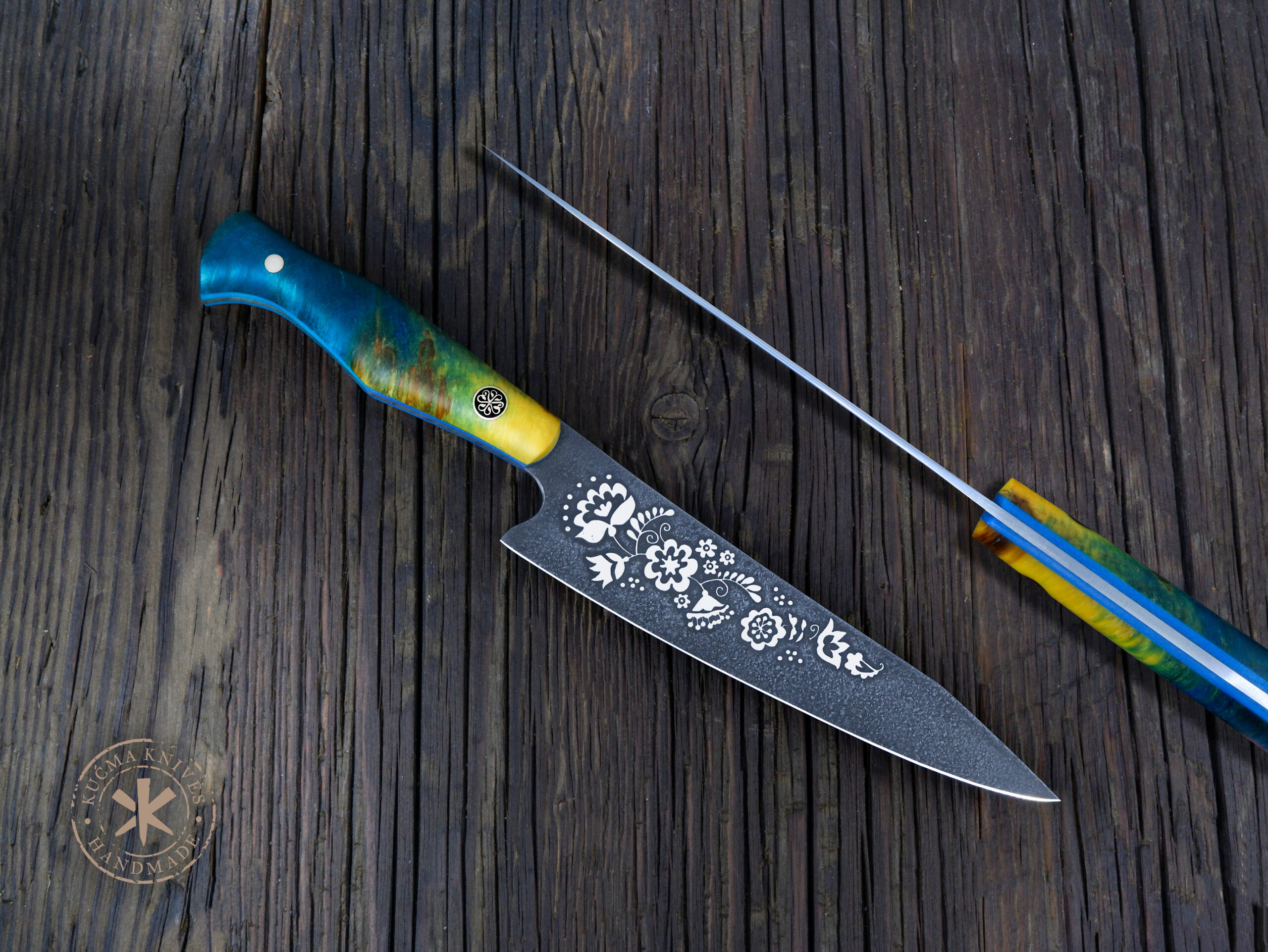
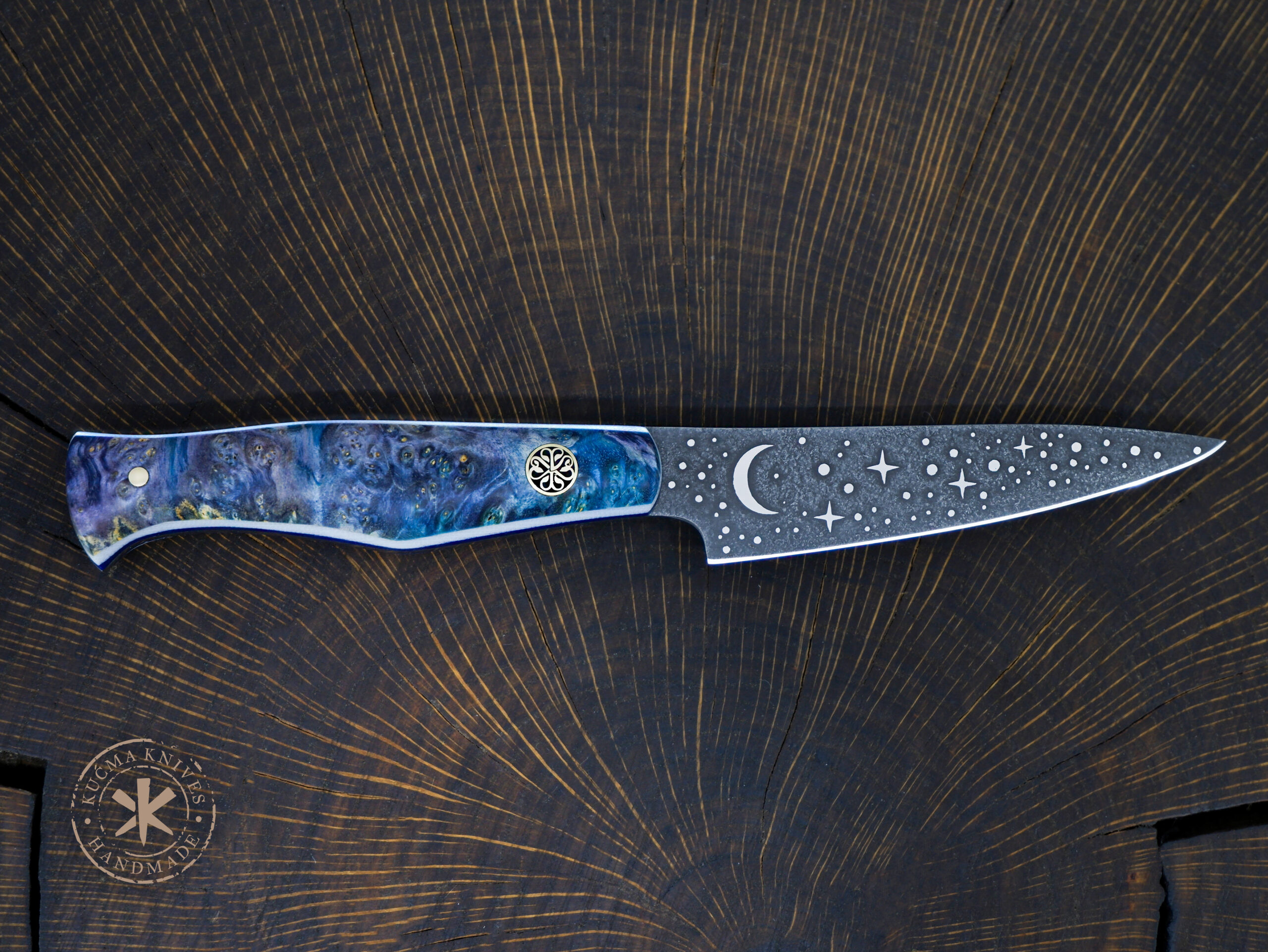
Short Chef’s Knife “Geometrical”
Basic, multi-purpose kitchen tool for every kitchen.
If you have smaller hands or simply do not like the big knives, this shorter version of a classic chef’s knife will be the best option for you. The blade length of the classic chef’s knife may vary from 20 to 26 cm (8-10.5 in) – in that case the blade’s length is shorter: 16,5-17,5 cm (6,5-7 in).
It has a long blade, curved cutting edge and – compared to the santoku – a pointed tip. The curve of the blade is adjusted for rocking back and forth motion: making thin cuts without lifting the blade from the cutting board. Broad blade may serve as a spatula, enabling to move sliced ingredients aside. Sharp tip is precise enough for delicate tasks as well.
Short chef’s knife is perfect for everyday use: when you have a lot of meat to cut, many vegetables to dice, nuts to chop and herbs to slice.
About carbon steel
🧑🍳 Carbon-steel knives, often known as working knives, are preferred by professional chefs as well as bushcraft and survival fans because of their ease of sharpening and their supreme cutting edge, which is simply unattainable using stainless steel.
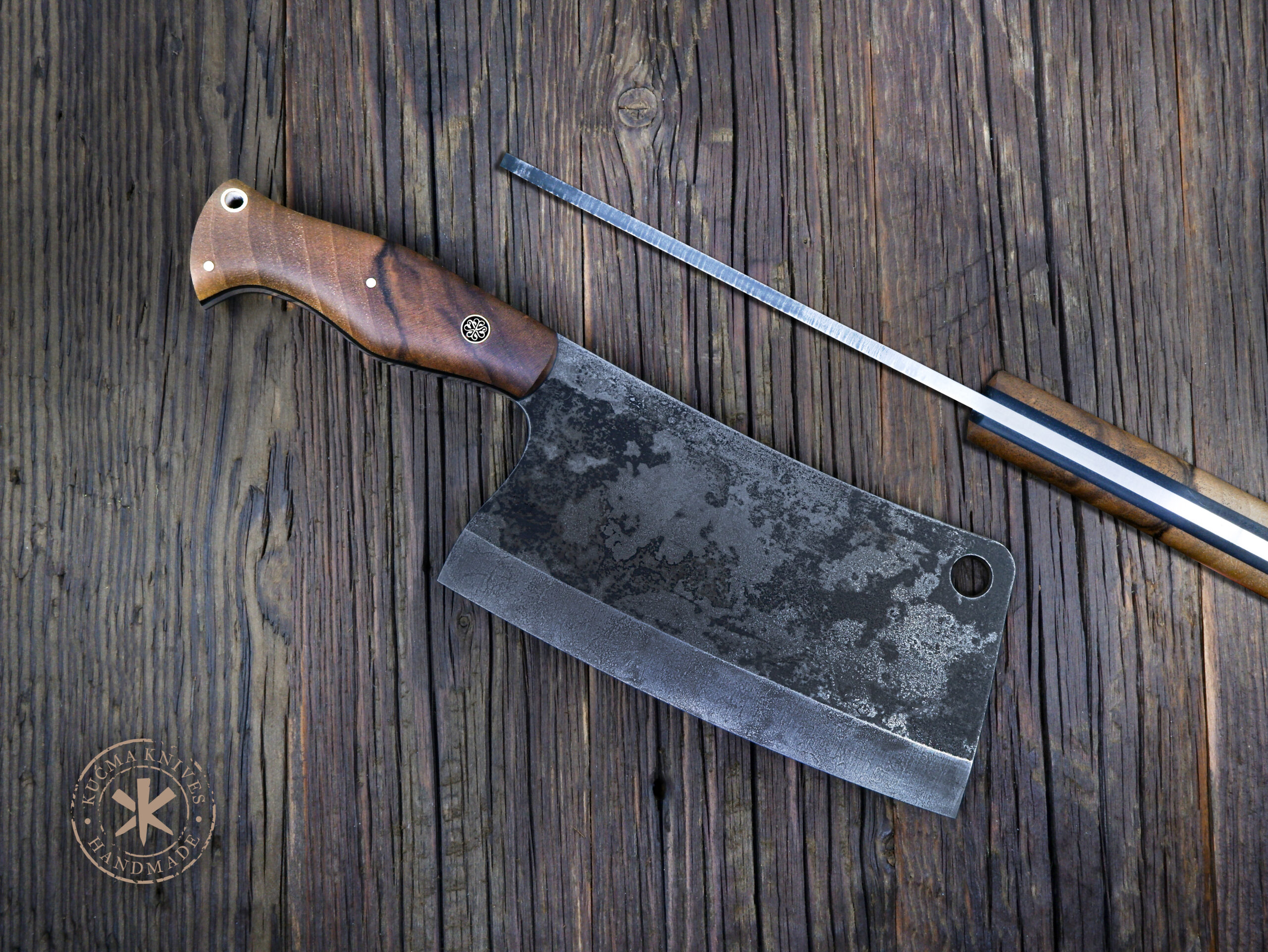
🤎 Carbon-steel is very reliable but a little more demanding. The knife will serve you for many years if you take care of it. A patina will form on the blade‘s surface over time – this is a natural process. If the knife comes into contact with salty or acidic products, the patina will appear faster. It’s nothing bad – it does not affect the taste of the food, nor is not harmful to health.
🕰 Like wood or other natural materials, carbon-steel will change over time, but it will also develop a unique character.
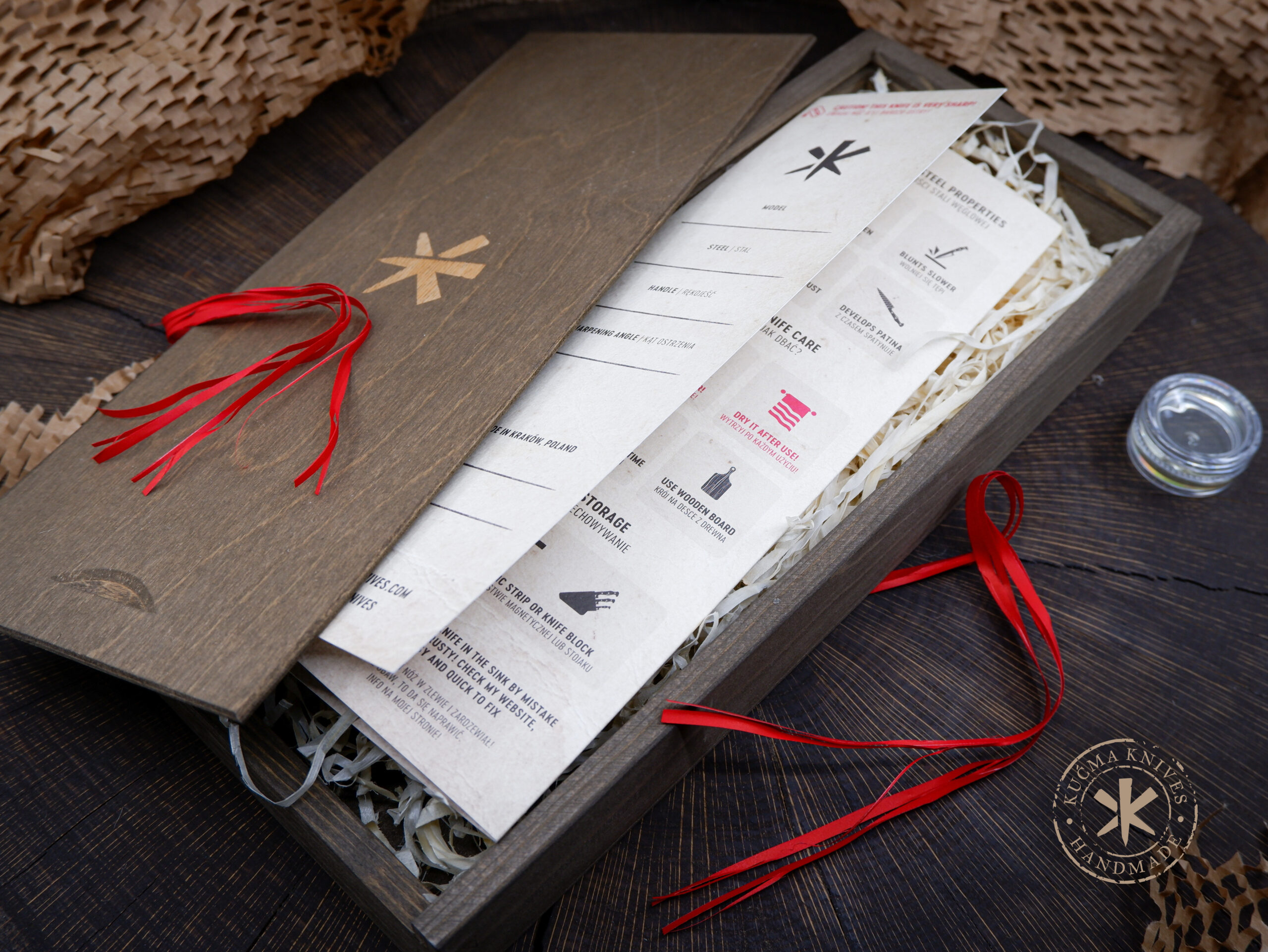
How to care?
- Always wipe the knife dry immediately after use.
- Never wash it in a dishwasher!
- Wipe the blade with olive oil (or any edible oil) once in a while.
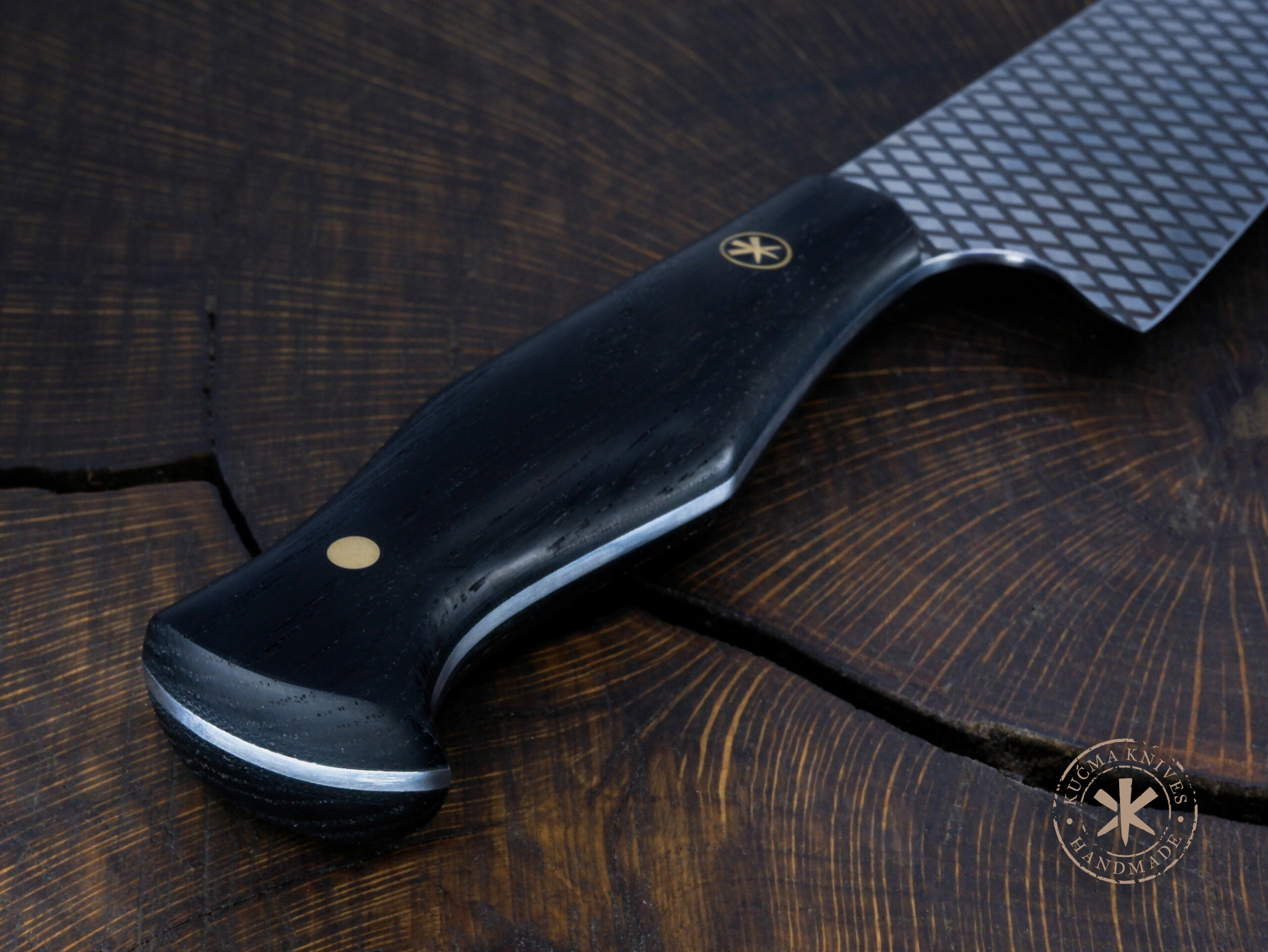
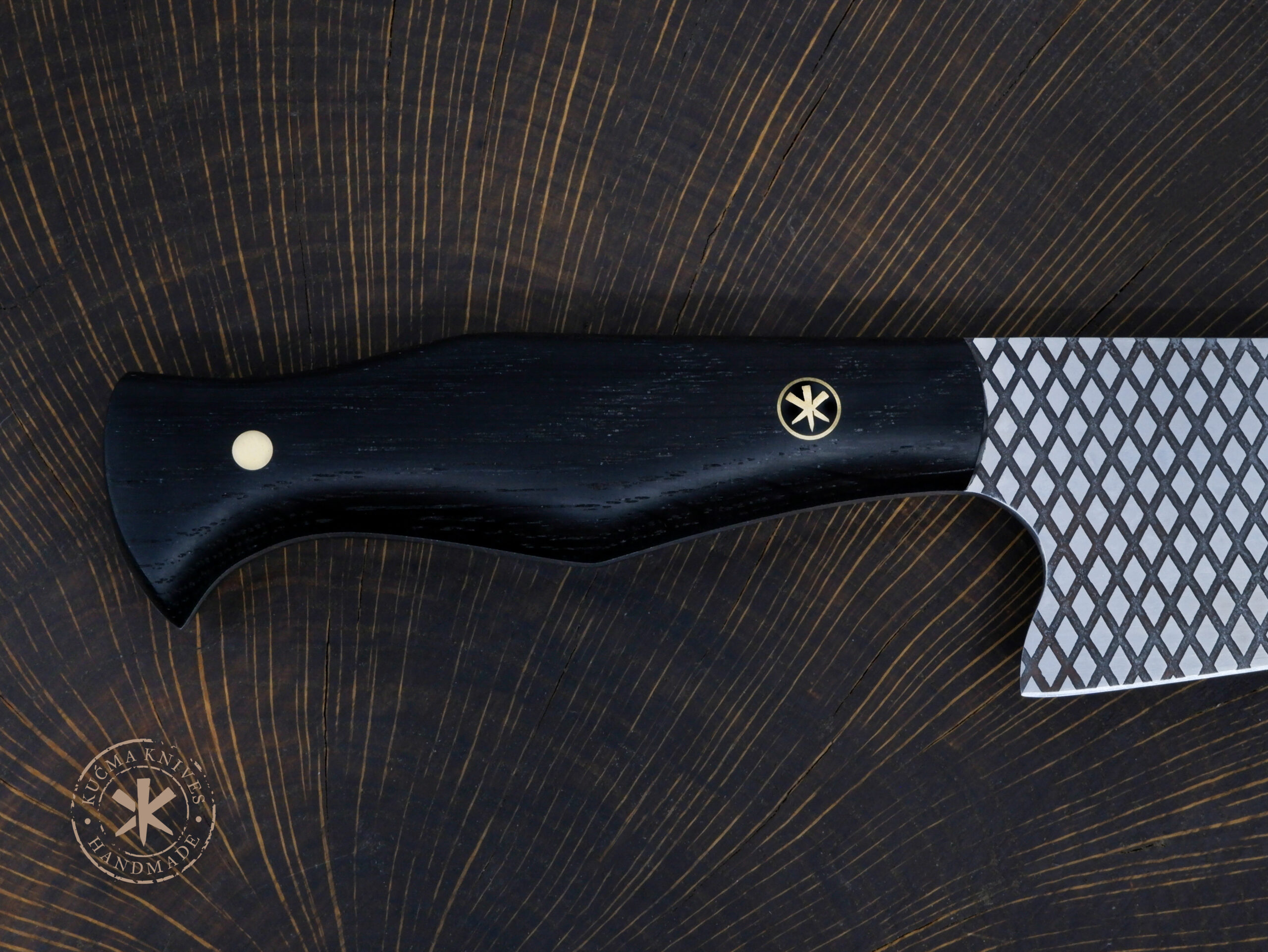
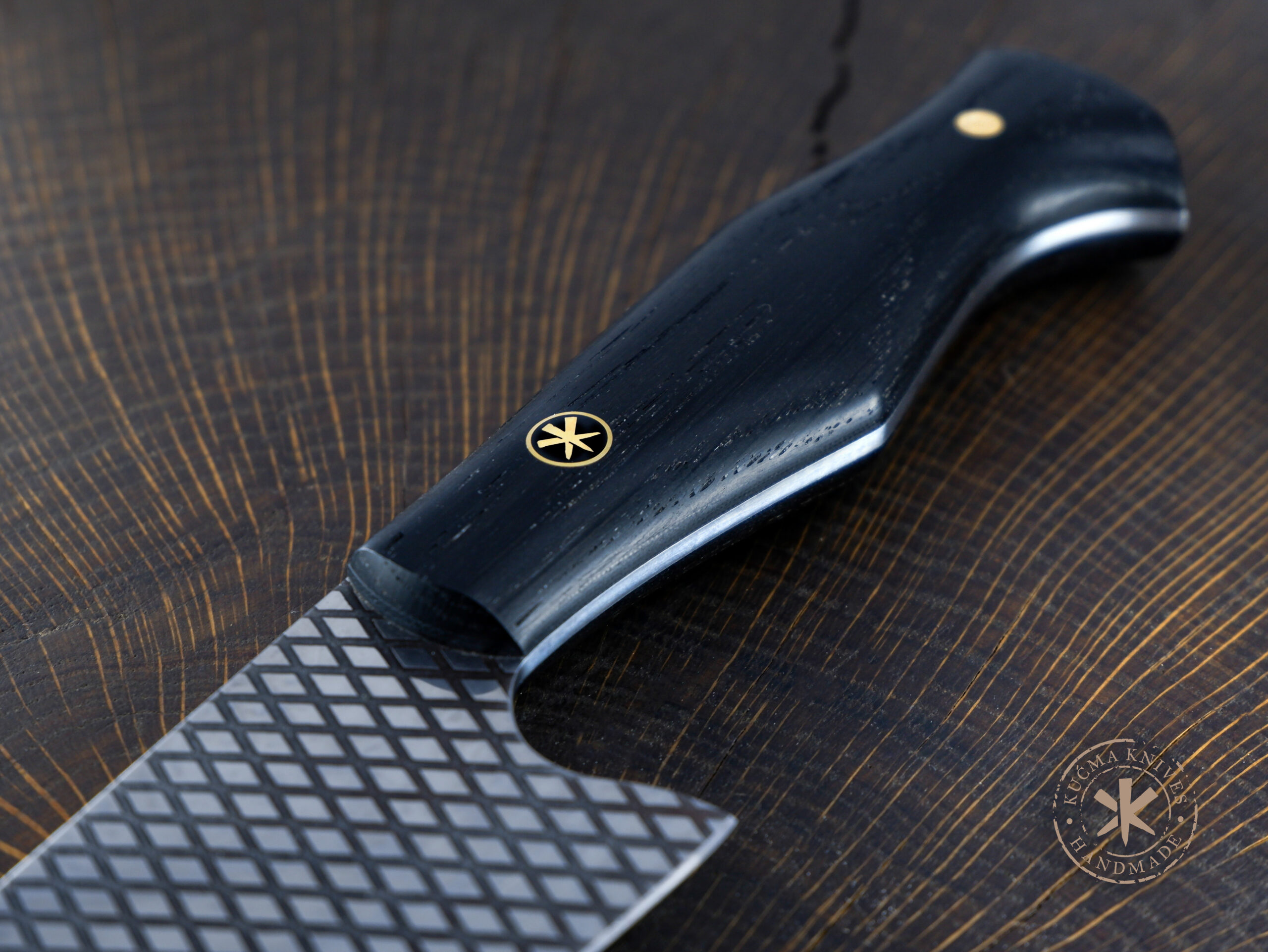
- You can treat the handle the same way – greasing is the best form of knife maintenance.
- Handmade knives require proper storage – they prefer magnetic strips (ideally one that does not scratch the blade) or knife blocks – in other words, they like to be displayed.